 Live Greyhound Betting
 UK Live Greyhound Betting: The Complete Punter's Guide
 Available in US
The definitive guide to live greyhound betting in the UK. Covers bet types, odds formats, race card reading, live streaming, grading systems, strategy fundamentals and responsible gambling for UK punters.
Start Reading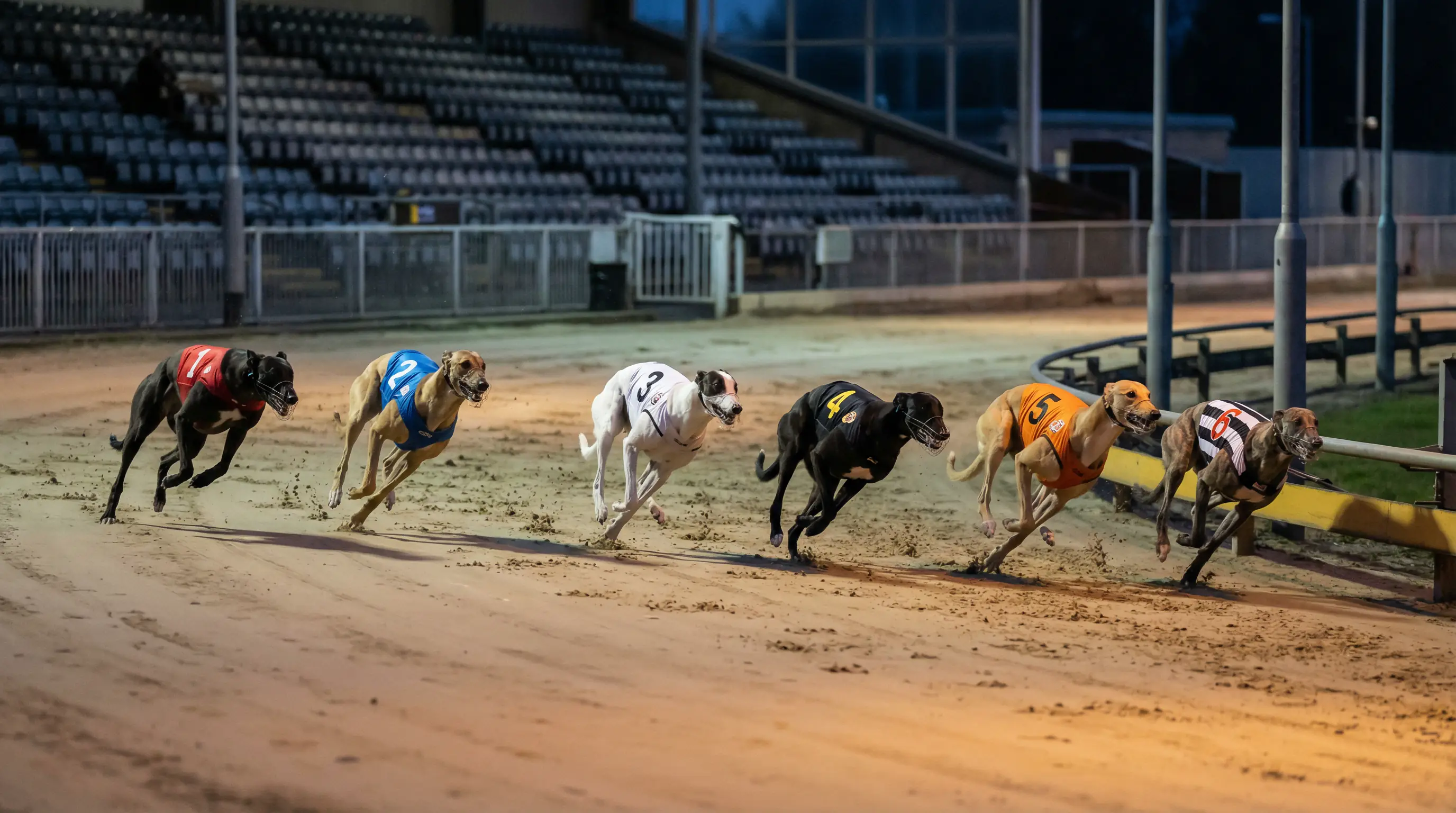
Why Live Greyhound Betting Is Its Own Game
Thirty seconds — that's all you get. From the moment the traps spring open to the instant the first greyhound crosses the finish line, an entire race unfolds in less time than it takes to read this paragraph. Live greyhound betting is not horse racing condensed into a shorter format. It is a fundamentally different discipline, shaped by compressed timelines, the near-total absence of meaningful in-play markets, and a reliance on pre-race data interpretation that rewards preparation over instinct. The race is too fast for course corrections. You either did the work beforehand, or you guessed.
That distinction matters because it changes the entire approach. In football or horse racing, live markets shift with the action — a goal, a stumble, a jockey's decision. With greyhounds, the pre-race window is where every decision lives. Your assessment of form, trap draw, track conditions and pace dynamics has to be locked in before the mechanical hare starts moving. Once those six dogs leave the boxes, the bet is already made.
And yet, this compressed format is precisely what draws serious punters in. Greyhound racing runs multiple times daily at tracks across England and Wales. BAGS fixtures — the Bookmakers' Afternoon Greyhound Service — deliver cards through the afternoon, meaning there is almost always a race to study and a market to engage with. The speed of the sport matches the rhythm of punters who want frequent, data-driven decisions rather than long waits between opportunities.
Key fact: A standard UK greyhound race over 480 metres lasts approximately 28 to 30 seconds. Six dogs run, there is no jockey influence, and the mechanical lure follows a fixed rail. Every variable that matters — form, trap, pace, weight, class — is available on the race card before the off.
This guide is built for punters who want to understand the mechanics of live greyhound betting in the UK — from the structure of the sport itself to the bet types, odds formats, race card reading, streaming options and strategic frameworks that separate informed wagering from casual speculation. Whether you are placing your first greyhound bet or refining an approach you have used for years, the sections ahead break the discipline into its component parts. No filler. No templates. Just the information you need to make better decisions before those traps open.
How UK Greyhound Racing Works
Six dogs, one mechanical hare, four bends. That is the basic geometry of almost every greyhound race in Britain. The simplicity is deceptive, though, because within that framework sits a sport governed by precise regulation, graded competition, and a scheduling infrastructure that delivers racing almost every day of the year. Understanding how the sport is organised is the foundation for understanding how to bet on it.
A greyhound race begins when the dogs are loaded into numbered traps — one through six, occasionally extending to eight at certain tracks. The mechanical lure begins its circuit around the outside of the track. As it passes the traps, the lids spring open and the dogs give chase. There is no jockey, no rider, no human intervention once the lids lift. The outcome depends entirely on the dog's speed, racing line, reaction time, and ability to navigate bends under pressure from five other animals running at forty miles per hour.
Most races cover distances between 260 and 710 metres, though the standard card at the majority of UK tracks centres on sprints (around 270 to 300 metres) and middle distances (450 to 500 metres). Marathon races — over 600 metres — feature less frequently but attract their own specialist dogs. Distance matters enormously for betting, because a dog that dominates at 480 metres may lack the stamina for a 660-metre contest, and a stayer who plods home over sprints might come alive over longer trips.
The Oval Track, the Sand, and the Lure
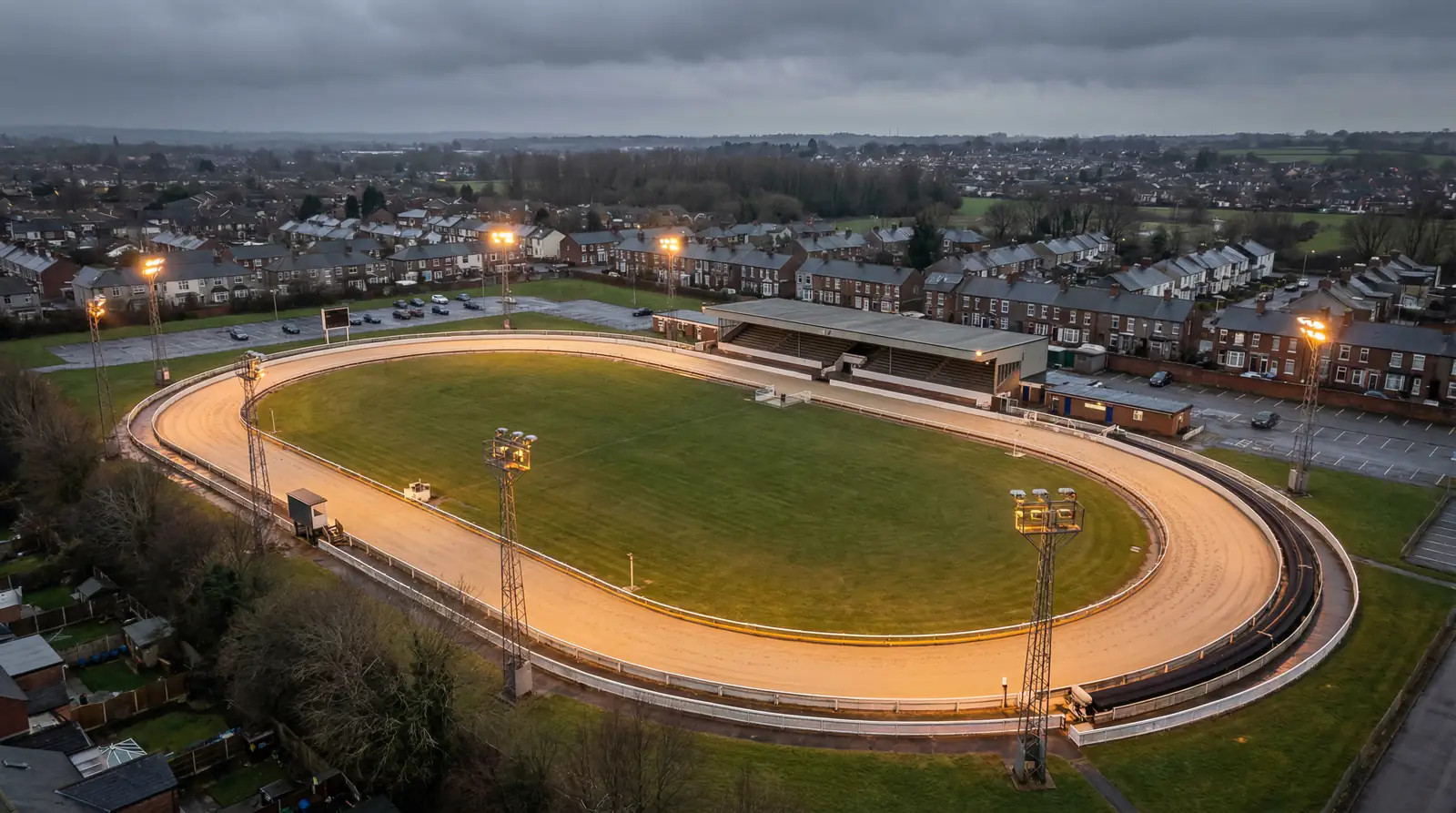
Every licensed UK track follows the same basic blueprint: an oval circuit with four bends, surfaced with sand, and fitted with a mechanical lure system that keeps the dogs running on a predictable path. But within that template, the variation is significant. Track circumferences range from roughly 261 metres at the tightest venues to over 500 metres at the most spacious. That range directly affects how races play out. Tight tracks amplify the advantage of inside traps and early pace because there is less room to recover from a slow start or wide running. Larger circuits give more room for closers — dogs who settle mid-pack and finish strongly through the final straight.
🧠 Data-Driven Tip Builder
1X2-Wahrscheinlichkeiten & Value-Check
Gewichte die wichtigsten Faktoren für ein Handballspiel selbst – Heimvorteil, Form, Verletzungen, Head-to-Head und Motivation. Der Rechner übersetzt deine Einschätzung in faire Wahrscheinlichkeiten und zeigt, wo der Buchmacher einen echten Value bietet.
The sand surface is another variable that looks uniform but is not. Sand composition, drainage capacity and maintenance schedules differ between tracks. After rainfall, a heavier surface slows times and tends to favour stronger, more powerful dogs over nimble speedsters. Dry conditions produce faster going and sharper splits. Punters who ignore going conditions are ignoring a variable that can shift the form picture by several lengths.
The lure itself is standardised — a mechanical device on a rail that maintains a consistent distance ahead of the leading dog. It gives the dogs something to chase, nothing more. Lure speed varies slightly between tracks, though, and some venues run faster lures that stretch the field and reduce bunching at the first bend.
GBGB Licensing and BAGS Fixtures
The Greyhound Board of Great Britain authorises every official meeting. As of early 2026, the GBGB licenses 18 active stadiums across England and Wales — a figure that has shifted in recent years following the closure of Crayford, Perry Barr and Swindon in 2025 and the opening of Dunstall Park at Wolverhampton. Scotland currently has no active licensed tracks, and Wales operates a single venue at Valley, though the Prohibition of Greyhound Racing (Wales) Bill introduced in the Senedd in late 2025 could eventually see that track close as well.
For bettors, the most important concept in the GBGB framework is BAGS — the Bookmakers' Afternoon Greyhound Service. BAGS fixtures are the bread and butter of off-course greyhound betting. These are daytime meetings, typically held at multiple tracks on most days of the week, and they exist specifically to supply content to betting shops and online bookmakers. If you have ever walked into a bookmaker on a Tuesday afternoon and seen greyhound racing on the screens, you were watching a BAGS meeting.
BAGS racing operates on a regular schedule and generates the vast majority of greyhound betting turnover. Evening meetings, by contrast, tend to be more spectator-facing events — open race nights, feature cards, and the higher-profile fixtures that attract crowds to the track. The distinction matters for betting because BAGS meetings often feature tighter markets and smaller fields of closely graded dogs, while evening cards can include open races where the class gap between competitors is wider and the form less predictable.
The structure of the sport shapes the structure of every bet placed on it. Now that the framework is clear, the next question is how the dogs themselves are classified — and what that classification tells a punter before a single race result is checked.
Greyhound Grading and Class Levels
A1 means something. A10 means something entirely different. The grading system is how UK greyhound tracks classify dogs by ability, and understanding it is essential for anyone trying to assess a race card with any intelligence. Grades are not decorative labels — they are functional markers that determine which dogs race against each other, and therefore which races offer the most predictable betting opportunities.
Every GBGB-licensed track operates its own grading structure, managed by a racing manager who assigns dogs to classes based on recent performance. The core principle is straightforward: dogs that win get promoted to higher grades, dogs that lose consistently get dropped to lower ones. This creates a competitive environment where, in theory, every race should feature six dogs of roughly comparable ability. In practice, the system produces exploitable mismatches — and spotting those mismatches is one of the most reliable edges in greyhound betting.
The grading letters describe the type of competition. A grades are standard flat races over the most common distances. D grades cover longer staying events. S grades denote sprint races. Within each letter category, the number indicates the class level. A1 is the highest standard of graded racing at a given track; A10 or higher represents the lowest. A dog racing in A2 is demonstrably faster and more consistent than one in A6.
A Grades — Standard Flat
The most common category. Covers middle-distance races (typically 450 to 500 metres) and forms the backbone of most race cards. A1 through A10 or beyond, depending on the track. The higher the number, the lower the class.
D Grades — Staying Events
Reserved for longer-distance races, often 630 metres and above. Stayers are specialists — their form over shorter trips is often misleading. D1 is the top class for marathon dogs at a given venue.
S Grades — Sprint Races
Short-distance events, typically 260 to 300 metres. Two-bend races where explosive early speed matters more than sustained pace. Sprint form does not translate reliably to middle-distance or staying races.
Open and Handicap Races
Open races sit above the grading system entirely — they feature the best dogs invited from across multiple tracks. Handicap races assign staggered trap positions based on ability. Both formats demand different analysis from standard graded fare.
The practical application is this: when you look at a race card, the grade tells you the approximate level of the field. A dog dropping from A2 to A4 has recently underperformed at a higher level but is now facing weaker opposition — that drop in class can represent genuine value. Conversely, a dog rising from A5 to A3 after a run of wins may find the step up too steep. Class movement is one of the simplest and most effective signals on the entire race card, and it is available to anyone who bothers to check.
Bet Types for Greyhound Racing
Start simple — a win bet, a place bet — then build. That is the sensible order for learning greyhound bet types, and it is the order this section follows. The range of markets available on a UK greyhound race is narrower than horse racing but deeper than most punters realise. Beyond the basic single-outcome wagers, forecast and tricast markets reward those who can read the full shape of a race, and accumulators offer the compounding returns that generate the big-number betting slips everyone shares and few can replicate.
Win, Place and Each Way
The win bet is the foundation of everything. You pick a dog, and if it finishes first, you collect. The payout is determined by the odds at the time you placed the bet — or at starting price if you did not take a fixed price. There is no ambiguity, no partial return. First past the post or nothing.
A place bet softens the requirement. Your dog needs to finish in the first two (in a six-dog race) to return money. Place odds are typically a fraction of the win odds — usually a quarter in standard greyhound racing with six runners. The return is smaller, but the probability of collecting is roughly doubled.
Each way combines both. It is literally two bets: a win bet and a place bet, each at the same stake. If you bet ten pounds each way, your total outlay is twenty pounds. If the dog wins, you collect on both the win and the place portions. If it finishes second, you lose the win part but collect the place return. The value of each way betting depends heavily on the odds. At short prices — say 2/1 or less — the place return rarely justifies doubling the stake. At longer prices, the arithmetic shifts.
Each Way Example: £10 at 5/1
Total stake: £20 (£10 win + £10 place)
If the dog wins: Win return = £10 x 5/1 = £50 profit + £10 stake. Place return = £10 x 5/4 (quarter odds) = £12.50 profit + £10 stake. Total return: £82.50. Profit: £62.50.
If the dog finishes second: Win bet loses (−£10). Place return = £10 x 5/4 = £12.50 + £10 = £22.50. Net result: +£2.50 profit.
If the dog finishes third or worse: Both bets lose. Loss: £20.
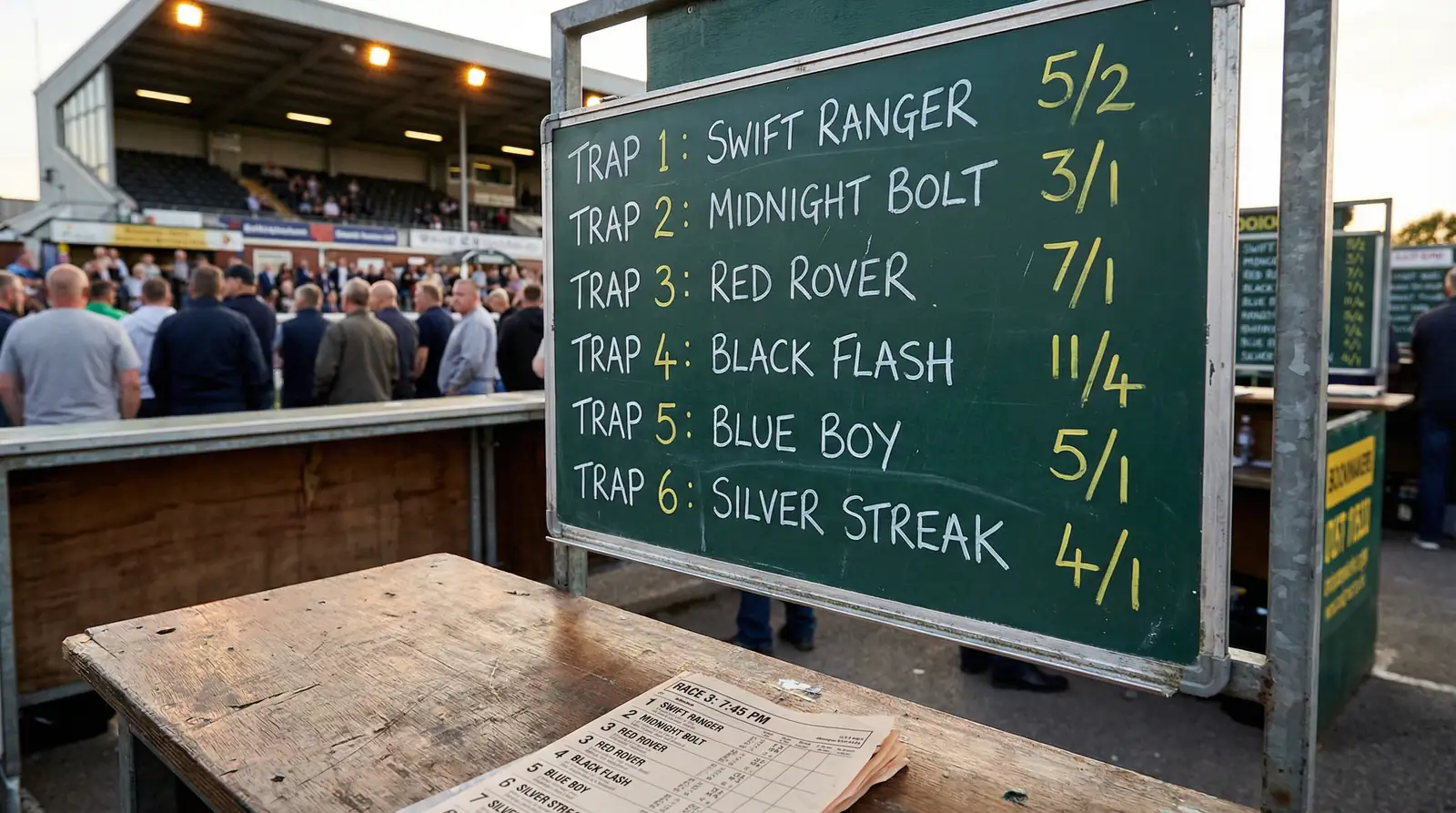
The each way bet is at its most powerful when applied to dogs at 4/1 or longer in races where the form suggests a realistic place chance even if the win is uncertain. Below 3/1, the place return often fails to cover the combined stake on a second-place finish, making the insurance component nearly worthless.
Forecast, Tricast and Combination Markets
Naming the first two home, in order — that's a straight forecast. It is one of the most popular markets in greyhound racing because six-dog fields make the task more achievable than in horse racing, where fields regularly exceed a dozen runners. The payout is determined either by the Tote pool dividend or by fixed odds set by the bookmaker, and it can be substantial. A correctly called forecast in a competitive field routinely pays between £20 and £100 for a one-pound stake, with outliers reaching considerably higher.
A reverse forecast covers both possible orderings of your two selections. If you pick Dog A and Dog B, your bet wins whether A finishes first and B second, or B first and A second. The cost is double a straight forecast — two bets instead of one — but the flexibility can be worth it in races where two dogs are clearly superior but their finishing order is uncertain.
Combination forecasts extend the principle to three or more selections, covering every possible first-and-second permutation among your chosen dogs. Three dogs generate six forecast combinations; four dogs produce twelve. The stake multiplies accordingly. Tricasts raise the bar further: you must name the first three finishers in exact order. A combination tricast covers every permutation of your selected dogs across those three positions.
Forecast Payout Walkthrough
Race: 6 runners, 480m, Romford. You fancy Trap 1 and Trap 4.
Straight forecast (Trap 1 first, Trap 4 second): £1 stake. Tote dividend declared at £34.20. Your return: £34.20.
Reverse forecast (Trap 1 and Trap 4 in either order): £2 total stake (two £1 bets). If Trap 4 wins and Trap 1 finishes second, the declared dividend for that permutation might be £41.60. Your return: £41.60 on the winning leg, minus the £1 lost on the other leg. Net profit: £39.60.
The dividend varies because it is pool-based — it depends on how much money was staked on each permutation by all bettors. Fixed-odds forecasts eliminate this uncertainty but may offer lower returns on popular combinations.
Accumulators and Multiple Bets
Chain two greyhound selections together and the maths changes fast. An accumulator links the returns from one bet to the stake of the next, compounding potential winnings across multiple races. A double covers two selections; a treble covers three; a four-fold covers four. Each additional leg multiplies both the potential return and the probability of losing.
The appeal is obvious — small stakes producing large payouts. A five-leg greyhound accumulator with each selection at even money turns a one-pound stake into a thirty-two-pound return. If the average odds are 3/1, the same five-leg accumulator returns £1,024. The reality is that one losing selection sinks the entire bet, and over a large sample, accumulators are among the lowest expected-value bet types available.
System bets offer a partial hedge. A trixie — three selections combined into three doubles and one treble — returns money if at least two of your picks win. A Yankee covers four selections across six doubles, four trebles and one four-fold. A Lucky 15 adds four singles to the Yankee structure, meaning you collect something even with just one winner. These bets cost more in total stake but protect against the all-or-nothing fragility of a straight accumulator. For greyhound betting specifically, where six-dog fields make individual selections more reliable than in larger-field sports, system bets can represent a more disciplined use of the multiple-bet format.
How Greyhound Betting Odds Work
Odds are not prices — they are opinions. When a bookmaker offers 5/1 on a greyhound, that figure represents their assessment of the dog's chance of winning, filtered through a margin that ensures the book produces a theoretical profit regardless of the result. Understanding this distinction is the prerequisite for any serious engagement with greyhound betting, because it reframes every price from a statement of probability into a negotiating position.
Greyhound odds in the UK are displayed in two primary formats — fractional and decimal — with a third mechanism, the starting price, determining the final odds for bettors who did not lock in a fixed price. Each format expresses the same underlying concept: the relationship between your stake and your potential return.
Fractional Odds
Displayed as two numbers separated by a slash: 5/1, 7/2, 11/4.
The left number represents profit; the right number represents the stake required to earn that profit.
A winner at 5/1 returns £5 profit for every £1 staked, plus the original stake back. Total return on a £1 bet: £6.
Traditional format in UK betting shops and on-course markets. Familiar to most British punters.
Decimal Odds
Displayed as a single number: 6.00, 4.50, 3.75.
The number represents the total return per unit staked, including the original stake.
A winner at 6.00 returns £6 for every £1 staked. The profit is £5 — identical to 5/1 fractional.
Increasingly common on online platforms and betting exchanges. Simpler for calculating accumulator returns.
The conversion is mechanical: divide the first fractional number by the second, then add one. So 7/2 becomes (7 ÷ 2) + 1 = 4.50 decimal. Both formats are available on every major UK bookmaker's platform, and most let you toggle between them in the settings.
Fractional, Decimal and Starting Price
3/1 means three pounds profit for every pound staked. That is the cleanest summary of fractional odds available, and it scales linearly. At 10/1, the profit is ten pounds per pound. At 1/2 — odds-on — the profit is fifty pence per pound, meaning you risk more than you stand to gain. Odds-on selections in greyhound racing are common in weak fields where one dog is clearly superior, but they are a trap for bettors who mistake short prices for certainty.
Starting price — abbreviated SP — is the price at which your bet settles if you did not take a fixed price before the race. In greyhound racing, SP is determined by the on-course market moments before the traps open. SP can work for or against you. If you backed a dog at 4/1 early and the market drifts to 6/1 by the off, your early price was worse. If the market contracts to 2/1, your early price was better.
Most experienced greyhound punters take a price when they see value and leave SP as a fallback. If you believe a dog's chances are being underestimated by the early market — perhaps because of a favourable trap draw that casual punters are overlooking — locking in early captures value before the market corrects. If the early price looks inflated, waiting for SP may be the better option.
Best Odds Guaranteed: How It Protects You
Take the price now — if SP is bigger, the bookmaker pays the difference. That is the core promise of Best Odds Guaranteed, and it is one of the most genuinely useful promotions available to greyhound bettors. BOG removes the downside of taking an early price. If you back a dog at 3/1 and the starting price drifts to 5/1, a bookmaker offering BOG will settle your bet at 5/1. You get the better of the two prices. The risk of locking in too early disappears.
BOG is widely available for greyhound racing at major UK bookmakers, but the terms vary. Some bookmakers apply it to all BAGS meetings but exclude certain evening fixtures. Others cap the maximum payout uplift. A few limit BOG to win singles only, excluding each way and multiple bets. Always check the specific terms before assuming coverage, because the devil in BOG is always in the detail.
Important: Best Odds Guaranteed does not apply universally to all greyhound meetings. Many bookmakers exclude selected evening or open race fixtures, and some cap the odds at which BOG applies. Verify coverage for the specific meeting you are betting on — do not assume it is automatic.
Reading the Greyhound Race Card
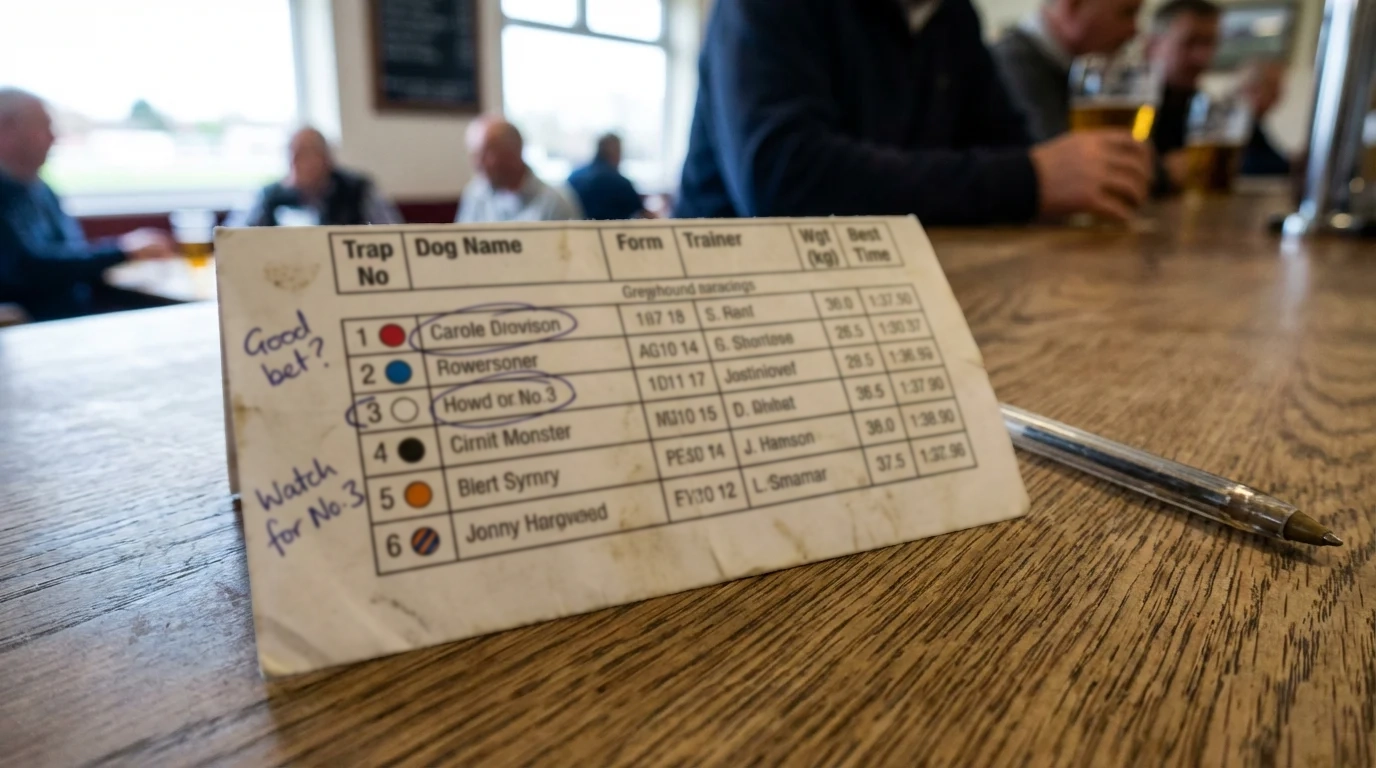
The race card is a compressed data sheet — every symbol means something. For a punter willing to decode it, the card contains everything needed to form an opinion on a race: recent form, trap allocation, weight, times, trainer, grade, and distance. For a punter who glances at it and picks a name, it is expensive wallpaper.
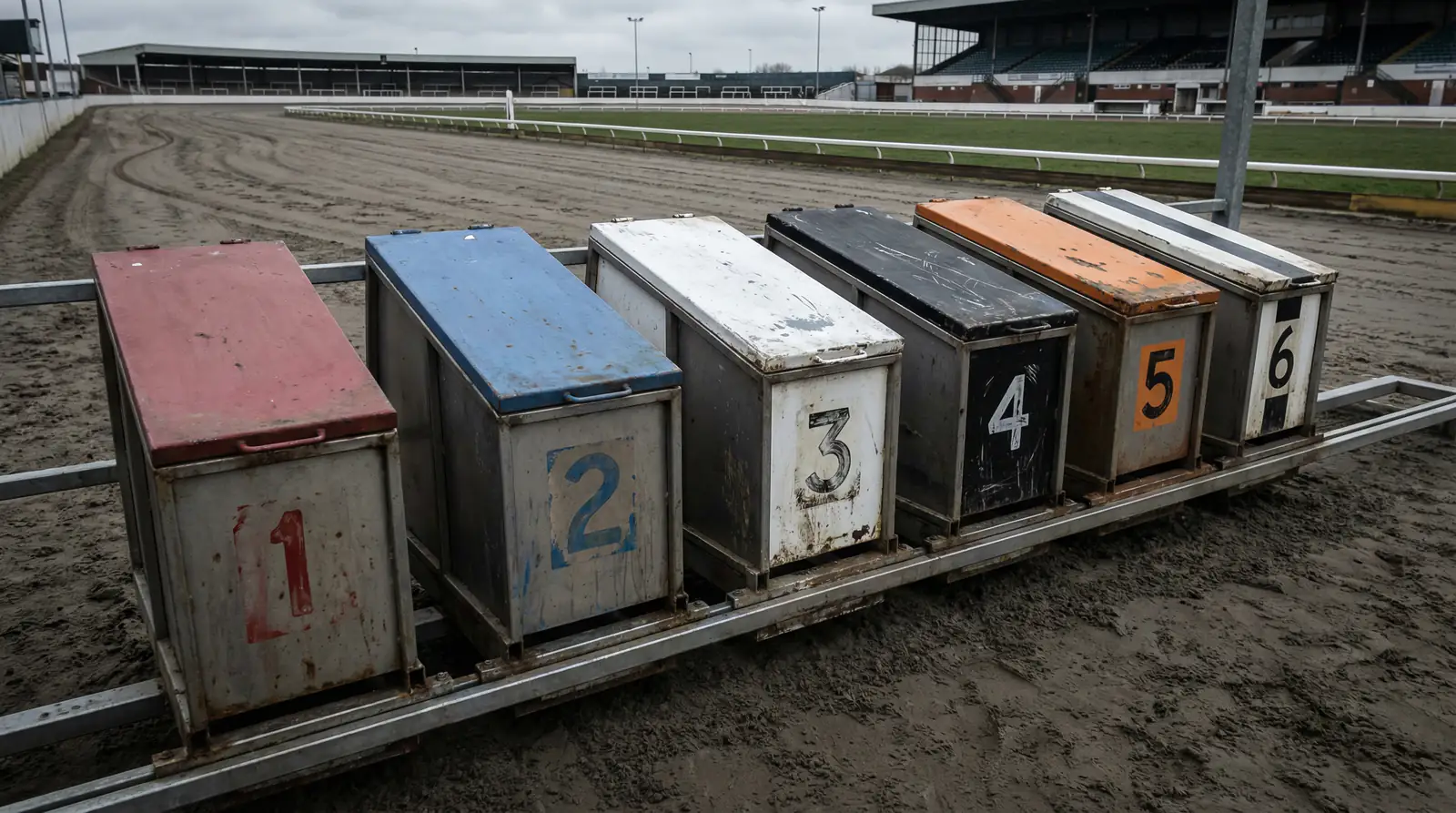
A standard greyhound race card reads left to right. The trap number and colour come first — trap 1 (red), trap 2 (blue), trap 3 (white), trap 4 (black), trap 5 (orange), trap 6 (striped). Next to each trap sits the dog's name, form figures, trainer name, best recent time, weight, and racing manager comments. Some cards include sectional times, calculated times and historical trap statistics. Sources like Sporting Life and Timeform provide more granular data than most bookmaker race cards, but the core elements are consistent.
Three things to check first on any race card: the dog's last three finishing positions (form), its trap number relative to its preferred running style, and whether it is moving up or down in grade. These three data points alone will filter out the weakest selections in most races.
Form Figures and What They Tell You
A string of 1s is obvious. A string of 6s is a warning. But the real information lives in the sequences between those extremes. Greyhound form figures display the dog's finishing position in its most recent races, read from left to right with the most recent result on the right. A form line of 3 2 1 1 tells you a dog that was finding its stride and is now winning. A line of 1 1 3 5 tells you one that is losing form or facing tougher competition.
Context modifies everything. A sequence of 4 4 3 looks mediocre until you discover the dog was running in A2 and has now been dropped to A5. Those mid-table finishes at a higher grade may translate into front-running dominance at a lower one. Similarly, a dog showing 1 1 1 might be about to step up in class — and its winning streak could end the moment it faces faster opponents. Form without context is noise. Form with context is signal.
Letters in the form line add further detail. An "m" or "M" indicates a moderate run, not a finishing position. A dash indicates the dog did not finish or there was an incident. Some cards use "R" for reserve run — a race where the dog was called up as a late replacement, which can affect preparation and performance. Reading these correctly prevents misinterpreting a form line as better or worse than it actually was.
Trap Draw, Weight and Sectional Times
Trap 1 runners hug the rail. Trap 6 runners need early pace. That much is widely understood, but the interaction between trap draw, track geometry and the individual dog's running style is where the real analysis begins. A dog with a strong preference for running the rail will benefit enormously from trap 1 at a tight track like Romford but gain less advantage from the same draw at a larger circuit like Nottingham where the bends are gentler and there is more room to manoeuvre.
Weight is recorded on the race card in kilograms and published for every runner. Most bettors ignore it entirely, which is a mistake. A greyhound's weight change of 0.5 kg between races is worth noticing. A dog that has gained a kilogram over its last few runs may be underdone — rested but not race-sharp. A dog losing weight consistently might be overraced or unwell. The absolute weight matters less than the trend, and the trend is there for anyone who reads the card chronologically rather than treating each race in isolation.
Sectional times break the race into segments: typically the run to the first bend, then the time from first bend to the finish. A dog that posts a fast sectional to the first bend is an early-pace runner — it wants to lead into the first turn and dictate the race from the front. A dog with a slower first sectional but a strong run-home split is a closer — it settles early and finishes fast. Knowing which profile each dog fits tells you the probable shape of the race before it happens, and that shape determines which traps matter and which dogs are likely to encounter traffic problems.
Calculated times refine the picture further. These adjusted figures strip out the effect of race interference — crowding, checking, being forced wide — and estimate what the dog would have run in a clear race. A dog with a slow actual time but a fast calculated time was probably unlucky, and if it draws a cleaner trap next time, the improvement could be significant. Most casual bettors never look at calculated times, which is precisely why they are valuable.
Live Streaming: Watching and Betting in Real Time
You can watch every UK greyhound race from your phone — the question is where. Live streaming of greyhound racing is offered by most major UK bookmakers, and in many cases access requires nothing more than a funded account or a small qualifying bet. The streams cover BAGS fixtures comprehensively and many evening meetings as well, giving bettors real-time visual access to the action they are wagering on.
The practical value of live streaming extends beyond entertainment. Watching races helps you assess how dogs break from the traps, how they handle the bends, and how they respond to pressure from other runners. A dog that consistently finishes third but is clearly being impeded at the first bend has more ability than its finishing positions suggest — and that insight only comes from watching.
Stream quality varies between platforms. Most major bookmakers deliver reliable video with a few seconds of latency relative to the live action — generally irrelevant for pre-race bettors but worth noting if you are watching the market move in the final moments. Some bookmakers offer picture-in-picture for mobile; others provide a basic single-stream window.
The rise of independent streaming through services like Gone To The Dogs has also changed the landscape. Their coverage of major events — including the 2025 English Greyhound Derby, which attracted over 36,000 views on final night — has brought a broadcast-quality feel to greyhound racing that the sport lacked for years. For 2026 fixtures, the combination of bookmaker streams and independent coverage means there are more ways to watch live greyhound racing than at any point in the sport's history.
Do
- Keep your bookmaker account funded before the race — most streams require at least a minimum balance or a placed bet to access.
- Watch early races on a card to assess track conditions before betting on later races.
- Use streams to verify how dogs break from the traps — first-bend positioning is critical data that form figures compress into a single number.
- Test stream quality on your device before relying on it for timing or late market decisions.
Don't
- Rely on the stream to time your bets — latency means the on-course market may have already closed before you see the dogs being loaded.
- Assume all meetings are streamed. Some evening open-race cards have restricted coverage depending on the bookmaker.
- Let the visual excitement of watching override the pre-race analysis you already completed. The stream confirms or updates your assessment — it does not replace it.
- Chase losses by immediately betting on the next streamed race without reassessing your staking plan.
Greyhound Betting Strategy Fundamentals
Greyhound betting rewards preparation more than intuition. With six-dog fields, fixed trap draws, published form data, recorded sectional times and a race duration under thirty seconds, the variables are fewer and more quantifiable than in most betting markets. The punter who works through those variables systematically will not win every race, but they will make better decisions than the one operating on gut feeling.
The strategic framework for greyhound betting rests on three pillars: trap bias analysis, pace mapping and class assessment. Each can be used independently, but they are most effective in combination. A dog drawn in a statistically strong trap, with the early pace to exploit it, running in a class it has dropped down into — that alignment of factors is what experienced greyhound bettors look for. It does not guarantee a winner. It does guarantee that the selection is grounded in something more substantial than hope.
Trap Bias and Track Conditions
Not all traps are equal — and the data proves it. Every UK greyhound track has measurable trap biases: certain traps produce more winners than the statistical average, and others produce fewer. These biases arise from track geometry. At a tight track with sharp bends, inside traps (1 and 2) consistently outperform because dogs drawn there reach the first bend sooner and with less distance to cover. At larger, more galloping tracks, the advantage shifts — outside traps can be competitive or even dominant because there is more room to use early pace without being squeezed into the rail.
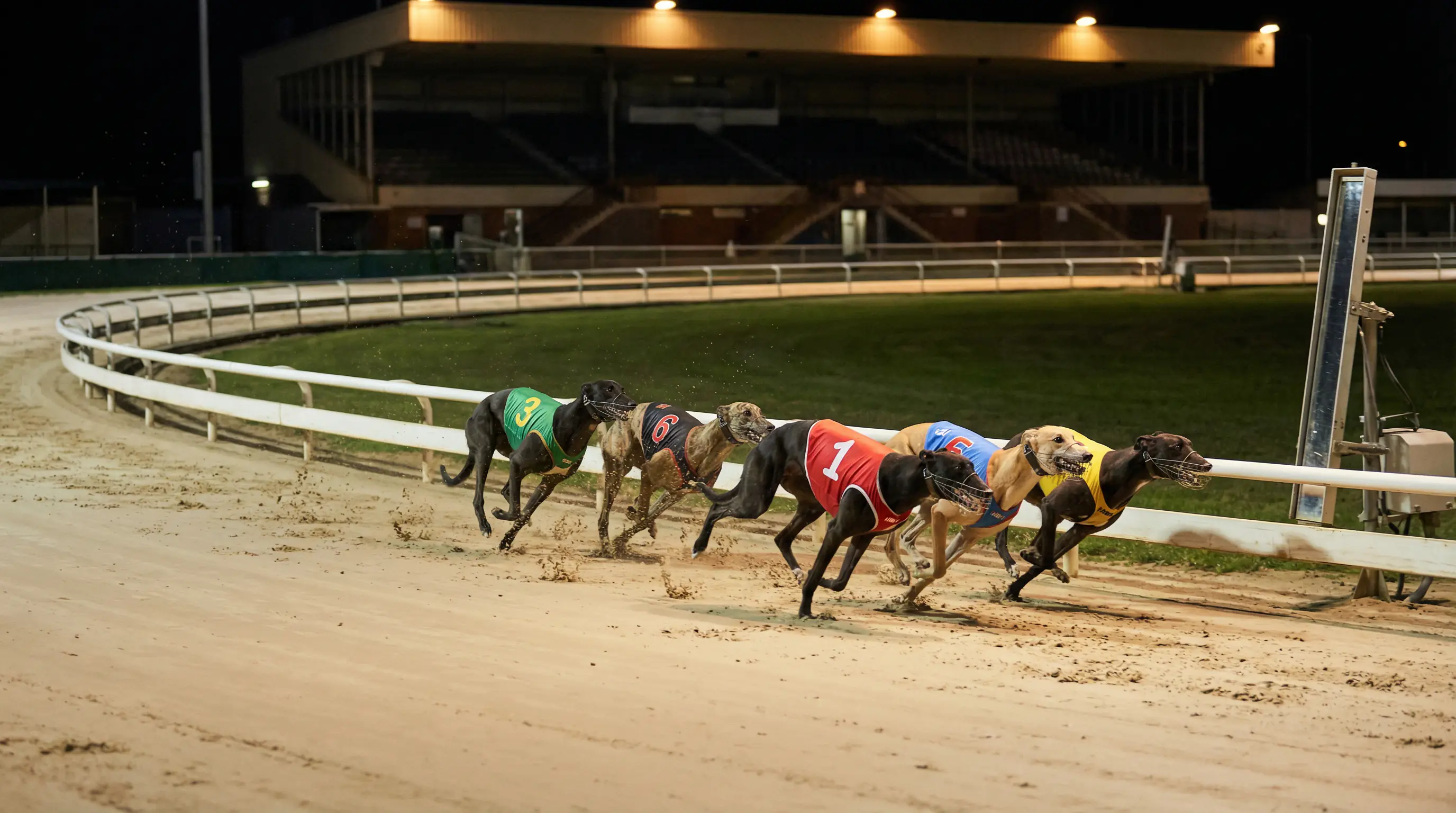
Trap statistics are published by most racing data services and can be filtered by distance, going conditions and time period. A diligent punter checks the current season's data rather than relying on historical averages, because track conditions change. Resanding, maintenance work and weather all affect how a track runs, and a trap that was strong six months ago might have lost its edge after surface work. The data is freely available — the discipline is in actually using it rather than assuming you already know which traps win.
Track conditions amplify or dampen trap biases. After heavy rain, sand becomes heavier and slower, which tends to exaggerate the advantage of inside traps at tight venues. On dry, fast surfaces, the playing field levels somewhat because speed offsets positional disadvantage.
Pace Mapping a Race
Before the hare moves, you should already know who breaks first. Pace mapping is the process of predicting the early dynamics of a race — which dogs will show speed to the first bend, which will settle behind, and where the traffic problems are most likely to occur. It is the closest thing to forecasting the future that greyhound betting offers, and it is built entirely from information available on the race card.
The method starts with sectional times. A dog that consistently posts fast times to the first bend is a front-runner. A dog with slow early splits but strong finishing times is a closer. When you map the pace profile of every dog in a six-runner field against its trap draw, a picture of the probable race shape emerges. Two front-runners drawn in traps 1 and 2 will contest the lead into the first bend — and that contest could cause both to check, creating space for a dog drawn wider that has the pace to clear the trouble.
The most exploitable scenarios arise when the pace map contradicts the market. If the favourite is a front-runner drawn in trap 1 but two other confirmed early-pace dogs are drawn either side of it, the risk of first-bend crowding is high. The market may not fully account for that positional risk because most casual bettors look at form in isolation. Pace mapping requires no specialist software — it requires reading the card carefully and thinking through the first ten seconds of the race before it happens.
Responsible Gambling and Staying in Control
Betting on greyhounds should be entertainment, not income. That distinction is easy to state and harder to maintain when you are in the middle of a losing run, the next race is five minutes away, and the form card in front of you seems to offer a clear path back to level. The structure of greyhound racing — frequent fixtures, quick results, constant availability — makes it particularly important to have boundaries in place before you start betting, not after things go wrong.
Every licensed UK bookmaker is required by the Gambling Commission to offer responsible gambling tools. These include deposit limits (daily, weekly or monthly caps on how much you can add to your account), loss limits, session time reminders, and self-exclusion options ranging from short cooling-off periods to permanent account closure. Using these tools is not a sign that something is wrong — it is a sign that you are managing your betting the way you would manage any other financial activity.
If you find that your betting is causing stress, interfering with daily responsibilities, or leading you to chase losses beyond the amounts you set out to spend, those are signals that the balance between entertainment and compulsion has shifted. Recognising that shift is the most important skill in any punter's toolkit — more important than form reading, trap analysis or odds calculation. If the fun stops, the betting should stop too.
Support and self-exclusion: GambleAware offers free, confidential advice and support at www.begambleaware.org. For national self-exclusion across all UK-licensed online gambling operators, GamStop allows you to register at www.gamstop.co.uk. Both services are free and independent of any bookmaker.
Bankroll discipline is part of responsible gambling, not separate from it. Setting a fixed amount for greyhound betting — money you can afford to lose entirely — and sticking to that amount regardless of results is the single most effective measure any punter can take. If the bankroll runs out, the session is over. No top-ups, no exceptions, no rationalisation. The dogs will still be running tomorrow.
Frequently Asked Questions
How does live greyhound betting work in the UK?
Live greyhound betting in the UK involves placing wagers on races at GBGB-licensed tracks, typically before the race starts rather than during it. Because a greyhound race lasts roughly 28 to 30 seconds, there is no meaningful in-play market — all decisions are made pre-race. You study the race card for form, trap draw, weight and times, select your bet type (win, each way, forecast, tricast or accumulator), and place your wager with a licensed bookmaker either online, via a betting app, on-course or in a betting shop. Most races are available to watch via live streaming on bookmaker platforms, and BAGS fixtures run throughout the day on most days of the week, giving you frequent opportunities to bet.
What is the difference between forecast and tricast bets on greyhounds?
A forecast bet requires you to predict the first two dogs to finish a race. A straight forecast demands the correct order — first and second in the exact sequence you specify. A reverse forecast covers both possible orderings of your two selections at double the stake. A tricast extends the principle to three dogs: you must predict the first, second and third finishers. Straight tricasts require exact order; combination tricasts cover all possible permutations of your selected dogs across those three positions. Tricasts pay significantly more than forecasts due to the added difficulty, and both pay out based on either a pool (Tote) dividend or fixed odds offered by the bookmaker.
Can you watch UK greyhound races live without placing a bet?
In most cases, bookmaker live streams require either a funded account or a small qualifying bet to access the video feed, so completely free streaming through a bookmaker without any account or balance is uncommon. However, independent streaming services have expanded coverage significantly. Platforms like Gone To The Dogs broadcast major events for free on social media and their own channels. Additionally, attending a track in person allows you to watch races without placing a bet — admission is charged but there is no requirement to wager. For the broadest free access to live coverage, independent online streams and social media broadcasts of feature meetings are the most reliable options.
After the Traps Open: Where Greyhound Betting Goes From Here
The dogs don't care about your bet — that's what makes this honest. There is no trainer whispering tactical instructions, no jockey making split-second decisions to protect your selection, no half-time adjustment to the game plan. Six greyhounds run on instinct, physical ability and whatever the trap draw and track conditions hand them. The absence of human intervention once the race starts is what makes greyhound betting a test of pre-race analysis in its purest form.
The sport itself is at an interesting juncture. The 2026 calendar marks the centenary of British greyhound racing — one hundred years since those first seven dogs chased an electric hare around the oval at Belle Vue in Manchester. The GBGB has responded with a packed schedule of open race competitions, including 50 Category One events across the year, while the Star Sports Orchestrate English Greyhound Derby returns to Towcester for rounds beginning at the end of April and the final on 6 June. Against that backdrop, the industry continues to navigate pressures from track closures and the Welsh ban that may reshape the licensed circuit in the years ahead.
None of that changes the fundamentals of what makes live greyhound betting compelling. The data is accessible. The races are frequent. The bet types reward different levels of engagement, from a simple win single to a studied combination tricast. And the speed of it — thirty seconds of pure, unmanaged competition — demands a clarity of preparation that other sports allow you to defer. You cannot adjust your position mid-race. The analysis happens before the traps open, or it does not happen at all. That constraint, more than anything else, is what separates greyhound betting from the rest. It is a discipline, and it rewards those who treat it as one.
