 Live Greyhound Betting
 Weather & Track Conditions in Greyhound Racing | Impact on Betting
 Available in US
How weather and track conditions affect greyhound racing results. Wet vs dry sand, wind, temperature and going conditions explained for smarter UK betting decisions.
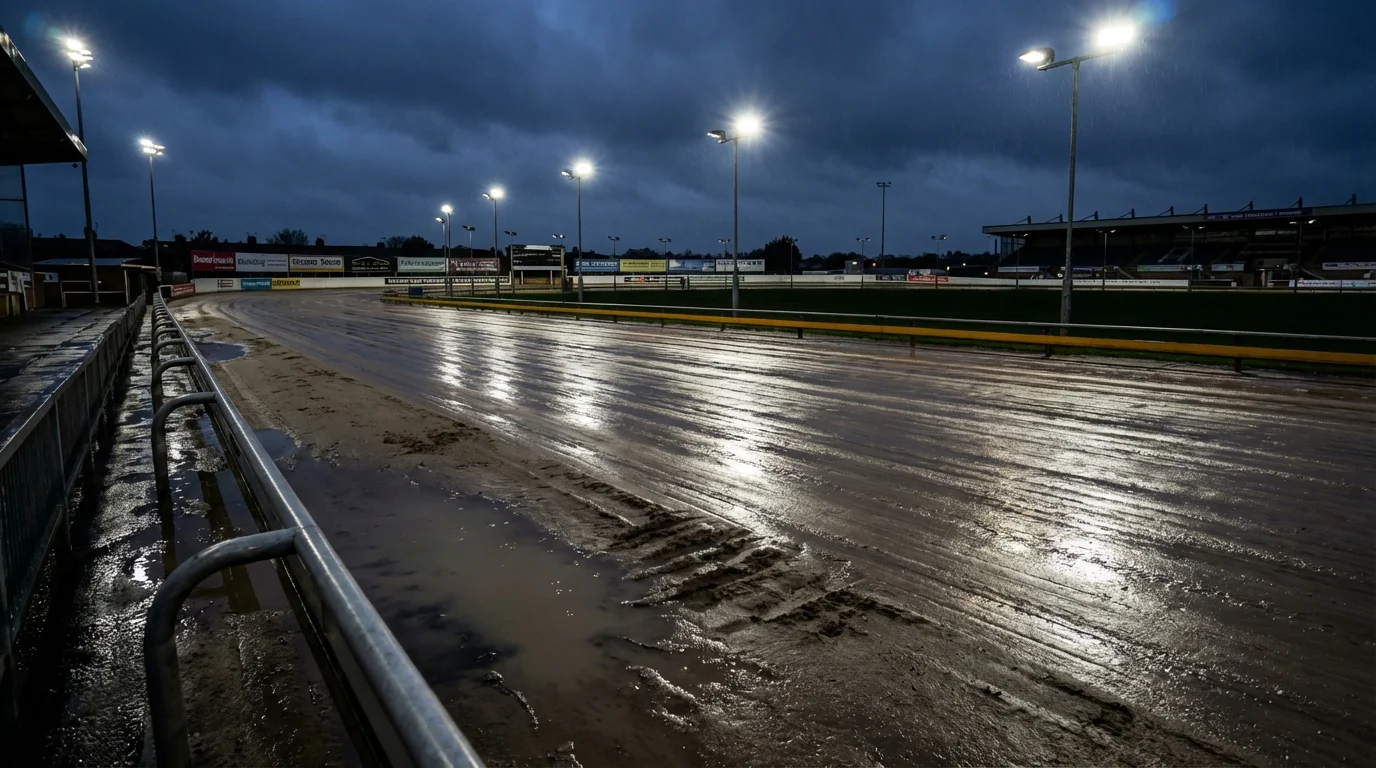
The Track Changes Before the Dogs Do
Greyhound racing takes place on sand. Not turf, not dirt, not polytrack — sand. And sand responds to weather in ways that directly affect race times, running styles, and results. A dry track on a summer evening runs fast and rewards early speed. The same track after a morning of heavy rain runs slower, looser underfoot, and can shift the advantage from front-runners to dogs with stamina and strength through the ground. The dogs are the same. The surface they run on is not.
Most greyhound bettors never check the weather forecast before placing a bet. They study the form, the trap draw, the grade — all valid — but ignore the one variable that can change how every dog in the field performs on the day. Track conditions are not a marginal factor. They are a material input that can turn a confident selection into a losing one, or reveal value in a dog whose recent form has been suppressed by unsuitable going.
How Rain Affects Sand Tracks
Rain is the primary weather factor in UK greyhound racing. When rain falls on a sand track, the surface absorbs moisture and becomes heavier. The sand grains bind together, reducing the firmness of the running surface and increasing the resistance underfoot. The result is slower times — dogs work harder to maintain speed, and their finishing times rise by anywhere from a few hundredths to over half a second depending on the severity of the rainfall and the track’s drainage characteristics.
The impact of rain is not uniform across the track. Sand depth, compaction, and drainage vary between the inside and outside of the running surface and between the straights and the bends. At some venues, the inside of the track drains more quickly because the surface is more compacted from constant use. At others, water pools on the inside, making the rail ground heavier while the outside remains comparatively firm. This localised variation can temporarily alter trap bias — the usual inside-trap advantage may diminish or even reverse if the rail ground is significantly softer than the outer running surface.
Persistent rain over several hours creates the heaviest going. A track that has absorbed sustained rainfall is markedly different from one that received a brief shower. On heavy going, dogs need physical strength as much as speed — the ability to drive through soft ground without losing momentum. Dogs with a powerful, ground-covering stride tend to handle heavy going better than lighter, speedier animals that rely on fast turnover. If you can identify dogs that have performed well in previous races on rain-affected tracks, you have a useful data point that most punters overlook.
Track staff at most venues work to maintain the surface between races — harrowing the sand, managing drainage, and in some cases watering the track in dry conditions to maintain a consistent going. But these interventions can only do so much. The fundamental condition of the surface on any given race card is determined by the weather in the hours and days preceding the meeting, and no amount of maintenance can fully compensate for a sustained downpour.
Temperature, Wind and Seasonal Patterns
Rain dominates the conversation about track conditions, but temperature and wind also play roles that are worth understanding.
Temperature affects the sand surface primarily through its relationship with moisture. In warm, dry conditions, the track firms up and runs fast. In cold conditions — particularly near freezing — the sand can harden in a different way, becoming compacted and unforgiving. Extremely cold tracks can be uncomfortable for the dogs and may produce irregular results as some animals react negatively to the firm, cold surface underfoot. Meetings can be abandoned if track inspections determine that the surface is too hard or frost-bound to be safe.
Heat presents its own challenges. On very hot summer days, the track surface bakes and becomes extremely fast, which generally favours speedier dogs. But the heat also affects the dogs themselves — greyhounds are muscular, short-coated athletes that can overheat if conditions are extreme. Evening meetings in summer typically run on faster surfaces than afternoon meetings at the same venue in winter, and the time difference in finishing times between the two can be significant. Comparing form from a February afternoon card with form from a July evening card at the same track requires adjustment for the likely surface difference.
Wind is the subtlest weather factor. On open tracks — particularly those without substantial grandstands on all sides — wind can affect dogs running into a headwind on the home straight or along an exposed back straight. A strong headwind slows finishing times and can particularly disadvantage front-runners, who face the wind throughout the race, while closers benefit slightly from the drag effect of running behind the field. Tailwinds on the home straight can produce unusually fast run-home splits and flatter closing dogs. The effect is small in absolute terms, but on a day with twenty-mile-an-hour gusts at an exposed venue, it is real enough to notice in the sectional times.
Seasonal patterns aggregate these individual weather effects into broader trends. Winter racing in the UK typically produces slower times, heavier going, and a greater emphasis on stamina and physical condition. Summer racing produces faster surfaces, sharper times, and rewards speed and early pace. Dogs that thrive in summer conditions may struggle in winter, and vice versa. If a dog’s form deteriorated significantly when the clocks changed and the weather turned, and it is now approaching the same seasonal shift again, its historical seasonal pattern is a relevant consideration.
Adjusting Your Bets for Track Going
The practical application of track condition analysis is in adjusting your assessment of each runner based on the day’s going. This does not require complex modelling. It requires awareness, a few key questions, and a willingness to let conditions influence your selections rather than ignoring them.
Before betting on any race card, check the weather at the track location. Has it rained recently? Is rain forecast during the meeting? What is the temperature? You do not need meteorological precision — a general sense of whether the track is likely to be fast, standard, or heavy is sufficient. Most bookmaker platforms and greyhound data sites indicate current track conditions, though the information is not always prominently displayed.
On heavy going, favour dogs with proven form on wet tracks. Look at their race history for performances on rain-affected cards — if a dog has won or placed on heavy going before, it has demonstrated the ability to handle the conditions. Dismiss recent form earned on fast ground if today’s track is significantly slower — a dog that won by three lengths on a firm surface might struggle to win at all when the going turns heavy and its speed advantage is neutralised.
On fast going, favour speed. Front-runners with sharp early splits are at their most dangerous when the surface is firm and fast, because the pace of the race is higher and the ability to break cleanly from the traps is amplified. Closers have a harder time on fast tracks because the leaders tire less — the firm surface supports their speed throughout the race rather than sapping their energy through soft ground in the final stages.
Adjust your expectations for finishing times. If you are comparing a dog’s time today with its time from a previous race, consider whether the conditions were similar. A 29.50 recorded on heavy going is a significantly better performance than a 29.50 on fast going, because the track was working against the dog. Calculated times attempt to make these adjustments automatically, but if you are working from raw times, mentally adding a few hundredths for wet conditions gives a fairer comparison.
Finally, be aware that conditions can change during a meeting. An afternoon card that starts in sunshine may run into rain by the later races. The surface deteriorates through the meeting as races churn the sand and weather takes effect. Dogs running in the last two or three races of a card may face different going from dogs that ran in the first two or three. If the forecast suggests weather arriving during the meeting, the later races may produce different results from the earlier ones — and adjusting your approach mid-card is a legitimate response to changing conditions.
The Going Is Not a Footnote — It Is a Factor
Weather and track conditions are the forgotten layer of greyhound analysis. They do not appear prominently on the race card, they are rarely discussed in pre-race commentary, and most bettors treat them as background noise. But the surface a dog runs on is as important as the trap it starts from or the grade it competes in. Ignoring it means ignoring information that directly affects race outcomes, and in a sport where the margins between winning and losing are measured in fractions of a second, no relevant information should be left on the table.
Assess greyhound track conditions on the livegreyhoundbetting homepage.
See which tracks are affected most in greyhound tracks.
