 Live Greyhound Betting
 History of Greyhound Racing in the UK | From Belle Vue 1926 to Today
 Available in US
The history of greyhound racing in the UK from the first Belle Vue meeting in 1926 to modern BAGS racing. Key milestones, legendary dogs and the sport's evolution.
A Hundred Years on Sand
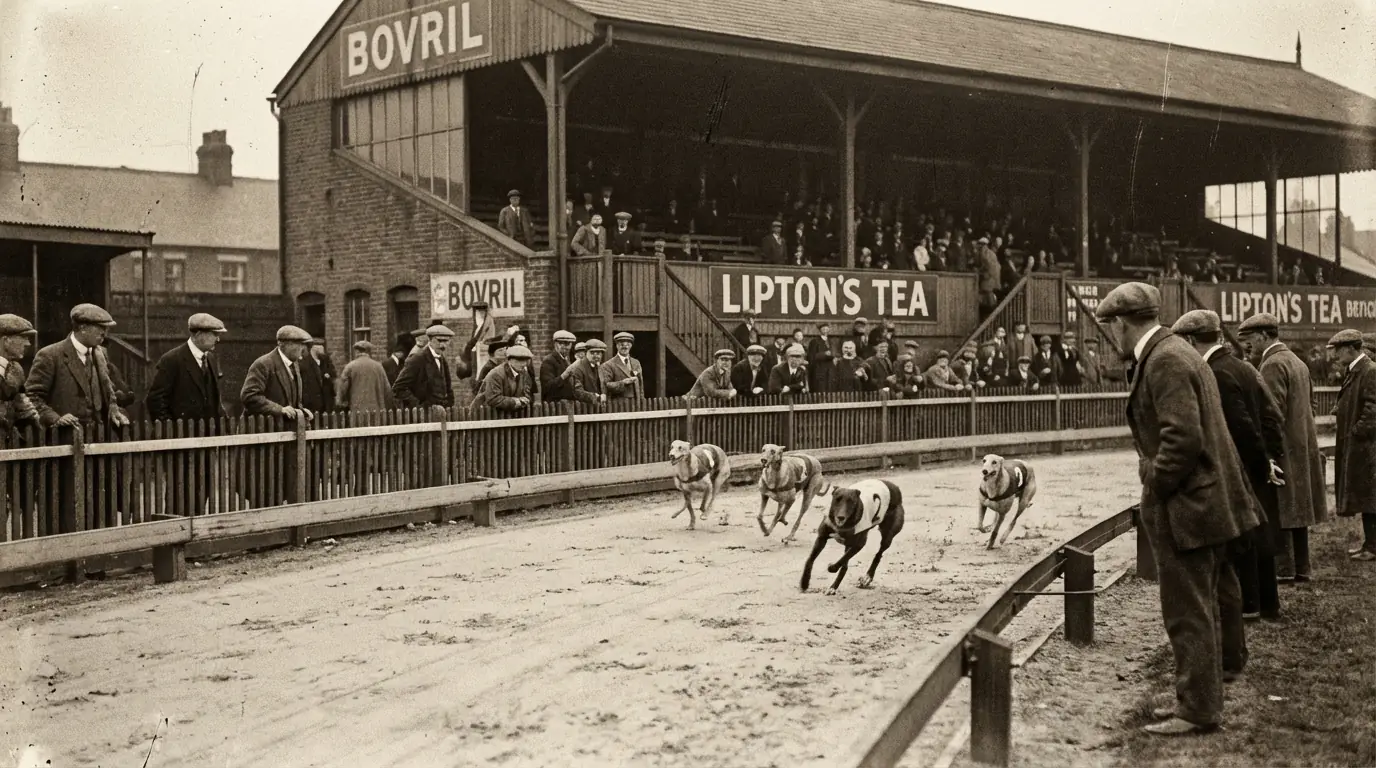
Greyhound racing in Britain is approaching its centenary as an organised sport. From a single meeting at a Manchester stadium in 1926 to a nationwide industry with dedicated tracks, daily fixtures, and millions wagered annually, the sport’s trajectory has been one of explosive growth, cultural embedding, prolonged decline, and contemporary reinvention. Understanding where greyhound racing came from provides context for where it stands today — a niche but resilient betting product operating in a landscape that bears little resemblance to the packed terraces and smoke-filled stadiums of its mid-century peak.
This is not a comprehensive history. It is a sketch of the key moments and transitions that shaped greyhound racing into the sport that bettors engage with today — the tracks they bet at, the structures they bet within, and the culture that surrounds the dogs.
Belle Vue 1926 and the Birth of British Dog Racing
Organised greyhound racing in the UK began on 24 July 1926 at Belle Vue Stadium in Manchester. The meeting was the first in Britain to use a mechanical lure — an electric hare running on a rail around the inside of an oval track — replacing the centuries-old practice of coursing, where live hares were chased across open fields. The mechanical lure transformed greyhound racing from a rural field sport into an urban spectacle that could be staged in stadiums, sold to spectators, and wagered upon at scale.
The Belle Vue meeting was an immediate commercial success. Thousands of spectators attended, and within months, investors were building greyhound tracks across the country. By the end of 1927, more than forty tracks were operating in England, Scotland, and Wales. The sport offered something that no other entertainment did at the time: evening events that working-class communities could attend after the factory shift, with the added excitement of on-course betting. Horse racing was an afternoon activity accessible mainly to those who could take time from work. Greyhound racing ran under floodlights, in the evening, in the cities where people lived.
The speed of expansion reflected both public demand and commercial opportunism. Track owners recognised that the combination of live sport, social atmosphere, and betting created a powerful draw. Stadiums were built with grandstands, restaurants, bars, and on-course betting facilities. The greyhound track became a social hub — a place to spend an evening with friends, watch the racing, place a few bets, and have a drink. That social function was as important to the sport’s early success as the racing itself.
Regulation followed quickly. The National Greyhound Racing Club was established in 1928 to govern the sport, introducing rules for racing, grading systems for dogs, and standards for track licensing. This regulatory framework distinguished licensed greyhound racing from the unlicensed “flapping” tracks that also proliferated — unregulated venues where the quality of racing and the integrity of betting were less assured. The distinction between licensed and unlicensed racing persisted for decades and remains relevant today through the GBGB’s licensing system.
The Golden Era: 1940s–1970s
Greyhound racing reached its peak popularity in the decades following the Second World War. In 1946, total attendance at licensed greyhound tracks in Britain exceeded 34 million — a figure that dwarfed attendance at professional football and established the sport as the most popular spectator activity in the country by sheer numbers. The post-war years were a period of limited entertainment options, and the dogs offered an accessible, affordable, and thrilling night out.
The 1950s and 1960s saw greyhound racing embedded in working-class culture across urban Britain. London alone had more than thirty tracks. Cities like Birmingham, Manchester, Glasgow, and Belfast each had multiple venues drawing large crowds on weekday and Saturday evenings. The sport produced household names — both dogs and trainers — and major events like the Greyhound Derby were covered in national newspapers and on television.
Betting was central to the experience. On-course bookmakers lined the rails at every meeting, and the tote provided pool betting as an alternative. For many working-class families, the dogs were the primary point of contact with organised gambling — the place where they learned to read a card, assess odds, and place a bet. The culture of greyhound betting that persists today, with its terminology, its traditions, and its relationship between punter and bookmaker, was forged during these decades.
The decline began in the 1970s. Television expanded entertainment options. The legalisation of off-course betting shops in 1961 meant that punters could bet on horse racing without attending a racecourse, reducing the unique advantage that greyhound racing held as an evening betting venue. Car ownership increased, spreading populations away from the urban centres where tracks were located. Gradually, attendances fell, revenue declined, and tracks began to close.
Decline, Closure and the Modern Landscape
The contraction of UK greyhound racing from the 1970s onward was severe and sustained. The number of licensed tracks fell from over sixty in the post-war peak to roughly twenty by the 2020s. Iconic venues closed permanently — White City in London, Hall Green in Birmingham, Wimbledon, Catford, Oxford. Each closure represented not just the loss of a racing venue but the disappearance of a community institution that had served its local area for decades.
The reasons for decline were multiple and reinforcing. Property values in urban areas rose, making track land more valuable for housing and commercial development than for greyhound racing. Operating costs increased while attendance and on-course betting revenue fell. The rise of online betting shifted wagering away from the track, removing the commercial incentive to maintain expensive physical venues. Welfare concerns about greyhound treatment, while not the primary driver of closures, contributed to negative public perception and reduced political support for the sport.
What survived was a leaner, commercially restructured version of the sport. The Greyhound Board of Great Britain — the successor to the NGRC — governs approximately twenty licensed tracks in England and Wales. Racing continues every day of the year through the BAGS system, which provides the daily fixture schedule that supports off-course betting. Evening open meetings and major competitions maintain the sporting tradition at a reduced scale. The dogs are still real, the racing is still genuine, and the betting markets are still active — but the context is radically different from the packed stadiums of the 1950s.
The modern greyhound racing landscape is defined by its relationship with online betting. The majority of greyhound wagering now takes place online, not on-course. Live streaming has replaced physical attendance for most bettors. BAGS meetings are staged primarily for the benefit of bookmaker customers watching on screens, not for spectators in grandstands. This commercial model — racing as a content product for the betting industry — is the economic reality that sustains the sport today. It is less romantic than the terraces and the tote boards, but it is functional, and it keeps greyhound racing alive as a regulated, competitive sport in the UK.
Welfare has become a central issue in the modern era. The GBGB operates an Injury Recovery Scheme and a retirement and rehoming programme. Regulatory standards for kennelling, transport, and veterinary care have been tightened significantly. Public scrutiny of greyhound welfare continues, and the sport’s long-term viability depends in part on demonstrating that the dogs are treated with care throughout their racing careers and after retirement. This is not a peripheral concern — it is an existential one for a sport that relies on public and political goodwill to maintain its licence to operate.
Where the Sport Stands Now
Greyhound racing in 2026 is a smaller, quieter sport than the one that drew thirty-four million spectators in a single year. It no longer dominates the national consciousness or the working-class social calendar. But it endures — in the daily BAGS fixtures that fill betting shop screens, in the Saturday evening opens that draw knowledgeable crowds, in the Derby finals that still produce moments of genuine sporting drama, and in the community of punters, trainers, and enthusiasts who maintain a connection to a sport that has been part of British life for a century.
For bettors, the history provides perspective. The form systems, the grading structures, the betting markets, and the track configurations you engage with today were shaped by a hundred years of evolution — from Belle Vue’s first mechanical hare to the live-streamed BAGS race on your phone screen. The sport has changed beyond recognition, but the fundamental appeal has not: six dogs, one hare, four bends, and the question of which one gets there first.
Explore UK greyhound racing history on the livegreyhoundbetting homepage.
Compare UK greyhound racing with horse racing in racing comparison.
