 Live Greyhound Betting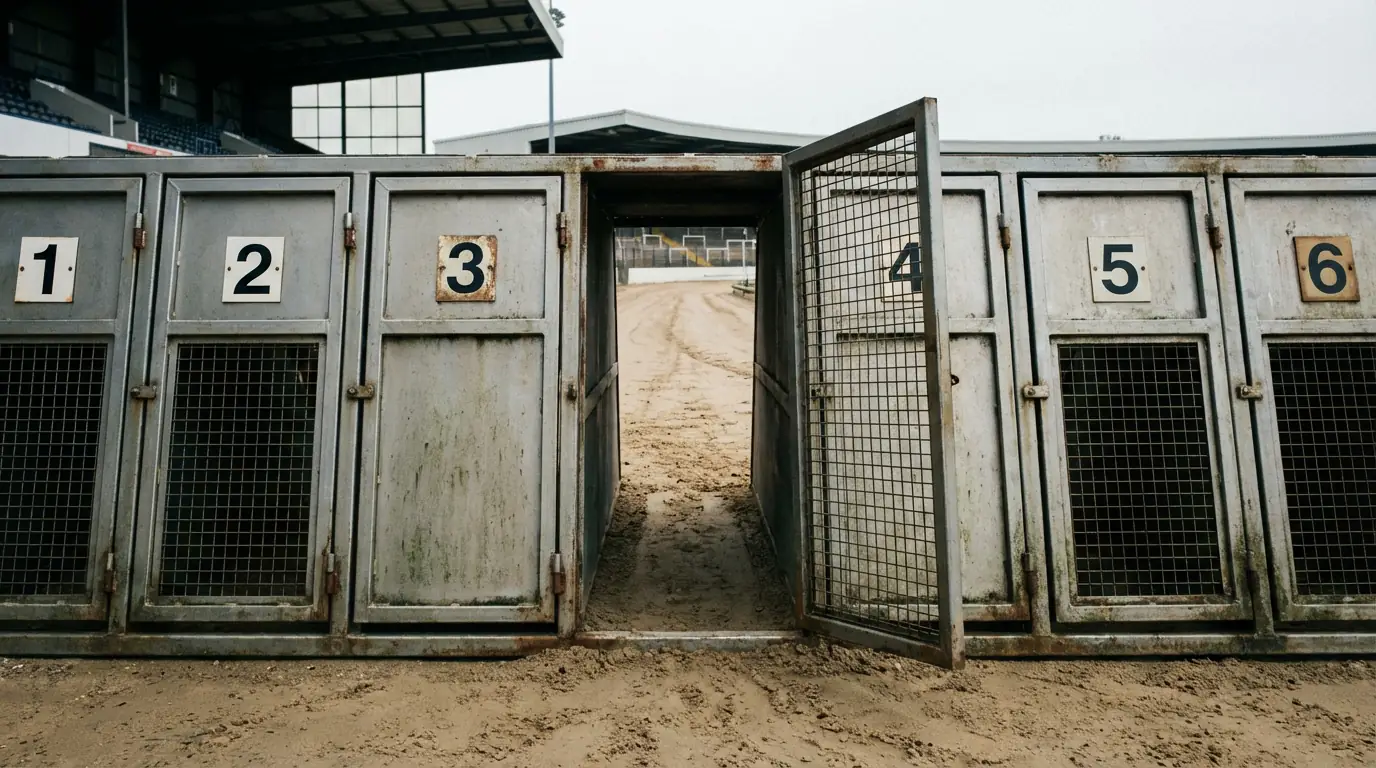
Best Greyhound Betting Sites – Bet on Greyhounds in 2026
Loading...
The Bet You Placed Is Not Always the Bet You Get
Non-runners are a routine part of greyhound racing. A dog might be withdrawn before a race for any number of reasons — injury during the warm-up, illness detected by the track veterinarian, a decision by the trainer, or simply failing to arrive at the venue. When that happens, the race changes. The field shrinks, the odds shift, and the bet you placed may no longer apply in the way you expected.
From a regulatory standpoint, non-runners in greyhound racing are handled under the GBGB Rules of Racing and the Tattersalls Rules on Betting. The rules determine whether your bet is voided, whether your payout is adjusted, and whether a replacement dog is introduced. They vary between bookmakers, and they differ meaningfully from non-runner rules in horse racing. Getting caught by a rule you did not know about is one of the most avoidable frustrations in greyhound betting.
This guide covers what happens to your bet when a greyhound is withdrawn, how reserve dogs and trap substitution work, and how different bookmakers handle non-runner scenarios.
What Happens When Your Dog Is a Non-Runner
If you have backed a specific dog and that dog is withdrawn before the race, the most common outcome is that your bet is voided and your stake is returned. This applies to win bets, each way bets, and the relevant leg of any accumulator or multiple that includes the withdrawn dog. A voided single bet simply returns your money as if the bet was never placed. A voided leg in an accumulator reduces the multiple by one — a four-fold becomes a three-fold, a treble becomes a double.
However, voiding is not the only possible outcome. In greyhound racing, unlike horse racing, a withdrawn dog is frequently replaced by a reserve. When a reserve is substituted, the race still runs with a full field of six dogs, and bets on the withdrawn dog may not automatically void. Instead, the rules depend on whether you bet at a fixed price or at starting price, and on the specific bookmaker’s policy regarding reserve substitutions.
If you placed your bet at a fixed early price on the withdrawn dog, most bookmakers will void that bet regardless of whether a reserve replaces it. You backed a specific animal, that animal is not running, and your stake is returned. But if you bet at starting price — or in some cases at SP on the race rather than on a specific dog — the situation becomes more complex, because the race proceeds with a full field and SP is determined for all runners including the reserve.
Forecast and tricast bets are handled differently again. If one of your named selections is withdrawn and replaced by a reserve, the bet typically stands with the reserve substituted in. If the withdrawn dog is not replaced — which reduces the field to five — forecast and tricast bets that included the withdrawn dog are usually voided. Some bookmakers will settle forecasts and tricasts with reduced fields, but the specific policy varies and you should check the terms of your operator before assuming either outcome.
The timing of the withdrawal matters. Dogs withdrawn well before the off — for instance, earlier in the day — are typically handled cleanly with void bets and full refunds. Dogs withdrawn close to the off, particularly after you have already placed your bet at a price, introduce more complexity because the market has already formed around the original field. This is where Rule 4 deductions can apply if a reserve takes the withdrawn dog’s place and the odds have been affected.
Reserve Dogs and Trap Substitution
Every greyhound meeting includes reserve dogs — animals that are on standby to replace any runner withdrawn before the race. Reserves are listed on the race card, typically identified as R1 and R2. When a runner is withdrawn, the first reserve steps into the vacant trap, wearing the same jacket colour and running from the same trap position as the withdrawn dog.
This system is specific to greyhound racing and does not exist in horse racing. In horse racing, a non-runner simply reduces the field. In greyhound racing, the preference is to maintain a full six-dog field whenever possible, because the sport’s betting structure and race dynamics are designed around six runners. A five-dog race changes the trap draw dynamics, the pace shape, and the place terms for each way bets.
The reserve dog is a different animal with different form, different running style, and potentially a very different level of ability. It may be stepping up or down in grade to fill the gap. Its recent form at the track may be strong or weak. The key point is that the reserve is not a like-for-like replacement — it is a different competitor entirely, and the race you analysed when you placed your bet is no longer the race that will actually run.
For bettors, the introduction of a reserve changes the complexion of the field. If the withdrawn dog was the clear favourite, the reserve may be significantly weaker, altering the balance of the race. If the withdrawn dog was an outsider, the reserve might have a similar profile and the overall impact on the race is minimal. Either way, you need to reassess your position. If your bet was on a different dog in the same race — not the withdrawn one — consider whether the substitution materially changes your selection’s chances.
Reserves are not always available. Occasionally, a meeting runs short of reserves because multiple dogs have been withdrawn across the card. In that case, the race runs with a reduced field — five dogs instead of six. When this happens, each way terms may change. Most bookmakers adjust place terms for fields below six runners, potentially reducing the number of places paid or offering place-only terms rather than the standard quarter-odds arrangement.
Bookmaker-Specific Non-Runner Policies
The fundamental principles — voiding bets on withdrawn dogs, substituting reserves, adjusting accumulators — are broadly consistent across UK bookmakers. Where the operators differ is in the specifics, and those specifics can affect your returns.
Some bookmakers apply Rule 4 deductions when a dog is withdrawn and a reserve takes its place. The logic is that the removal of a runner from the original field changes the odds of the remaining dogs, and the deduction compensates for that shift. Other bookmakers do not apply Rule 4 in greyhound non-runner situations at all, instead simply voiding bets on the withdrawn dog and settling all other bets at the original price. The difference matters: a Rule 4 deduction of 20p or 30p in the pound on a winning bet at 3/1 reduces your profit noticeably.
Forecast and tricast policies are another area of divergence. Some operators will void any forecast or tricast that includes a withdrawn dog, regardless of whether a reserve is substituted. Others will substitute the reserve into the forecast or tricast and settle accordingly. A few operators offer both options — voiding the bet and returning the stake, or allowing the bet to stand with the reserve included — and let the punter choose. If you regularly bet forecasts and tricasts, understanding your bookmaker’s specific policy on reserve substitution is essential.
Accumulator treatment is generally more standardised. A withdrawn dog voids that leg, and the accumulator is settled as a reduced multiple. The remaining legs stand at their original prices, though if Rule 4 has been applied to any of those legs, the deductions will be factored in. If you bet a four-fold and one leg is void, you receive the returns of a treble — assuming the other three legs win.
One area that catches bettors out is the difference between early withdrawals and late withdrawals. A dog withdrawn the morning of the meeting is handled cleanly — void bets, clear market adjustments. A dog withdrawn minutes before the off, after prices have been published and bets have been placed, creates a messier situation. The market has already formed around that dog’s presence, and removing it disrupts the price structure. Late withdrawals are where Rule 4 deductions are most likely to be applied, and where the gap between different bookmakers’ policies is most visible.
Check the Rules Before You Need Them
Non-runners are not rare events. Over the course of a week’s racing, withdrawals happen at most meetings. If you bet on greyhounds regularly, you will encounter non-runner situations repeatedly, and the rules that apply to those situations will directly affect your returns.
The time to learn your bookmaker’s non-runner policy is before you place your first bet, not after your selection has been withdrawn and you are trying to understand why your stake has not been returned or why your payout has been reduced. Check the racing rules or terms and conditions section of your bookmaker’s site. Look specifically at how they handle reserve substitutions, whether they apply Rule 4 deductions on greyhound withdrawals, and how they treat forecasts and tricasts that include a non-runner.
Greyhound non-runner rules are less complex than they initially appear, but they are different enough from horse racing conventions that assumptions can be costly. Know the rules. Check the reserves listed on the card. And if a withdrawal changes the race beyond what you anticipated, remember that you are not obligated to let the bet stand — in some cases, you can place an additional bet to hedge your position, or simply accept the void and move on to the next race.